
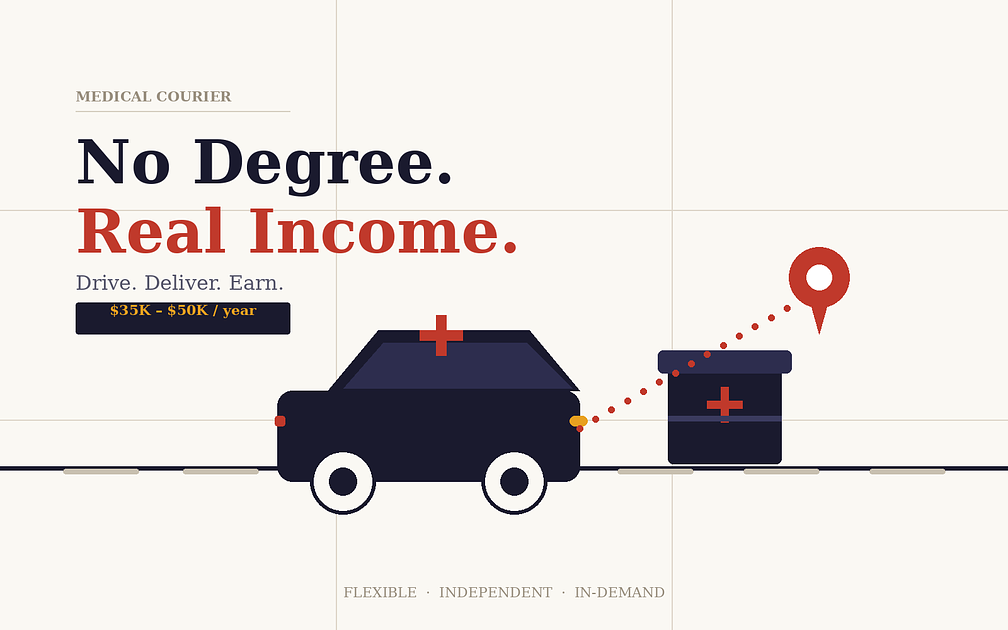
Make Real Money as a Medical Courier (No Degree Needed!)
A practical guide to one of the most overlooked flexible income opportunities
Forget the four-year degree. Forget the $80,000 student loan. If you have a reliable car, a clean driving record, and the discipline to show up on time, you could be earning solid, consistent income as a medical courier — often within just a few weeks of starting.
This isn't gig work delivering pizza. Medical couriers are a critical link in the healthcare supply chain, transporting lab specimens, medications, medical equipment, and legal documents that hospitals and clinics depend on every single day.
What Is a Medical Courier?
A medical courier is a driver who transports time-sensitive healthcare materials between locations — think hospitals, clinics, laboratories, pharmacies, and blood banks. Unlike food delivery or retail logistics, these routes are typically scheduled, predictable, and repeat daily, giving you income stability that gig apps rarely offer.
Common items you might transport include:
What You'll Carry
- Blood and urine samples for lab testing
- Prescription medications and specialty drugs
- Medical records and legal documents
- Organs and tissues for transplant (specialized roles)
- Diagnostic equipment and medical supplies
- COVID/flu test kits and vaccines
"Medical couriers don't just deliver packages — they deliver results patients are waiting on, sometimes urgently."— The reality of the role
How Much Can You Actually Earn?
Here's what the numbers look like in the real world. Earnings vary by location, hours, and whether you work for a company or contract independently — but the range is genuinely promising.
- $18–22Avg. hourly rate (employed)
$35–50K Annual salary range
$1,000+Weekly potential (independent)
Independent contractors who build their own route contracts with multiple clients — hospitals, labs, clinics — report significantly higher earnings. Running your own small medical courier operation puts the ceiling much higher, though it requires more hustle upfront.
What You Actually Need to Get Started
The barrier to entry is genuinely low. No college education is required. No specialized certifications for most routes. Here's the typical checklist:
01
A Reliable Vehicle
A clean, well-maintained car is your primary tool. Some routes require a specific vehicle size — check with companies you apply to. Keep insurance up to date and expect mileage reimbursement or per-route pay to offset fuel costs.
02
A Clean Driving Record
Most companies will run a background and driving history check. Minor infractions may be acceptable, but serious violations are typically disqualifying. This is non-negotiable — you're handling sensitive medical cargo.
03
Basic Compliance Training
You'll likely need HIPAA awareness training (free online), DOT compliance understanding for hazmat materials, and OSHA bloodborne pathogen training for lab samples. These are usually short online courses, often provided by the employer.
04
Smartphone & Navigation Skills
Routes are often managed via apps. You need to be comfortable following digital manifests, scanning barcodes, and maintaining chain-of-custody logs — all done on your phone.
05
Professionalism & Punctuality
Healthcare is time-critical. A lab result delayed means a patient waiting on a diagnosis. The most successful couriers treat this like a professional job, not a casual side gig — and they get the best contracts because of it.
How to Land Your First Gig
Option 1: Work for an Established Company
Companies like LabCorp, Quest Diagnostics, Stat Medical Couriers, and local hospital networks hire couriers regularly. Search Indeed or LinkedIn for "medical courier" in your area. This is the easiest entry point — steady pay, routes provided, no client hunting required.
you can find these on medicalcourierjobs.com.
Option 2: Go Independent with Courier Apps
Platforms like Dropoff, OnFleet-powered networks, and regional medical logistics startups allow drivers to pick up medical delivery jobs independently. You set your availability and build your income around it.
Option 3: Build Your Own Route Business
The highest-earning path — and the most work. You cold-call or visit local clinics, labs, and medical offices and pitch your courier services directly. Win a few contracts and you're essentially running a small logistics business. Many successful operators start solo and eventually hire other drivers.
"The healthcare system runs on logistics. Every hospital, every lab, every clinic needs someone to move things. That someone can be you."— The business opportunity, plainly stated
The Honest Pros and Cons
Why People Love This Work
- Work independently — no boss watching over your shoulder
- Flexible scheduling, especially with independent contracting
- Consistent demand — healthcare never slows down
- Routes often repeat daily, so you know exactly where you're going
- Meaningful work — you're supporting patient care
- Low startup costs compared to most businesses
That said, it's not without challenges. Early morning pick-ups are common, fuel costs eat into margins, and your income is directly tied to your reliability. Missed deliveries can cost you contracts. Treat it professionally and those risks are manageable — but they're worth knowing upfront.
Tips to Maximize Your Income
Stack Multiple Clients
Don't rely on one hospital or one app. Build relationships with multiple healthcare facilities so that if one contract changes, your income doesn't collapse overnight.
Track Every Expense
Mileage, fuel, vehicle maintenance — all deductible if you're an independent contractor. Use an app like MileIQ from day one. The tax savings are significant.
Specialize for Higher Pay
STAT couriers (same-day emergency routes) and organ transport drivers earn premium rates. As you gain experience and build trust with clients, push toward these higher-value delivery types.
Present Yourself Professionally
A clean vehicle, a professional appearance, and excellent communication with dispatch and receiving staff will set you apart from casual gig workers. Reputation compounds fast in a local healthcare network.
Is This Right for You?
If you're someone who values independence, doesn't want to be chained to a desk, and is looking for income that doesn't require years of schooling or an expensive certification — medical courier work deserves a serious look. The need is constant, the pay is real, and the barrier to entry is lower than almost any other healthcare-adjacent career.
The only thing standing between you and your first route is taking the first step.